Part 3 of 4 in the series “Book of Mormon Geography — And Why It Matters”
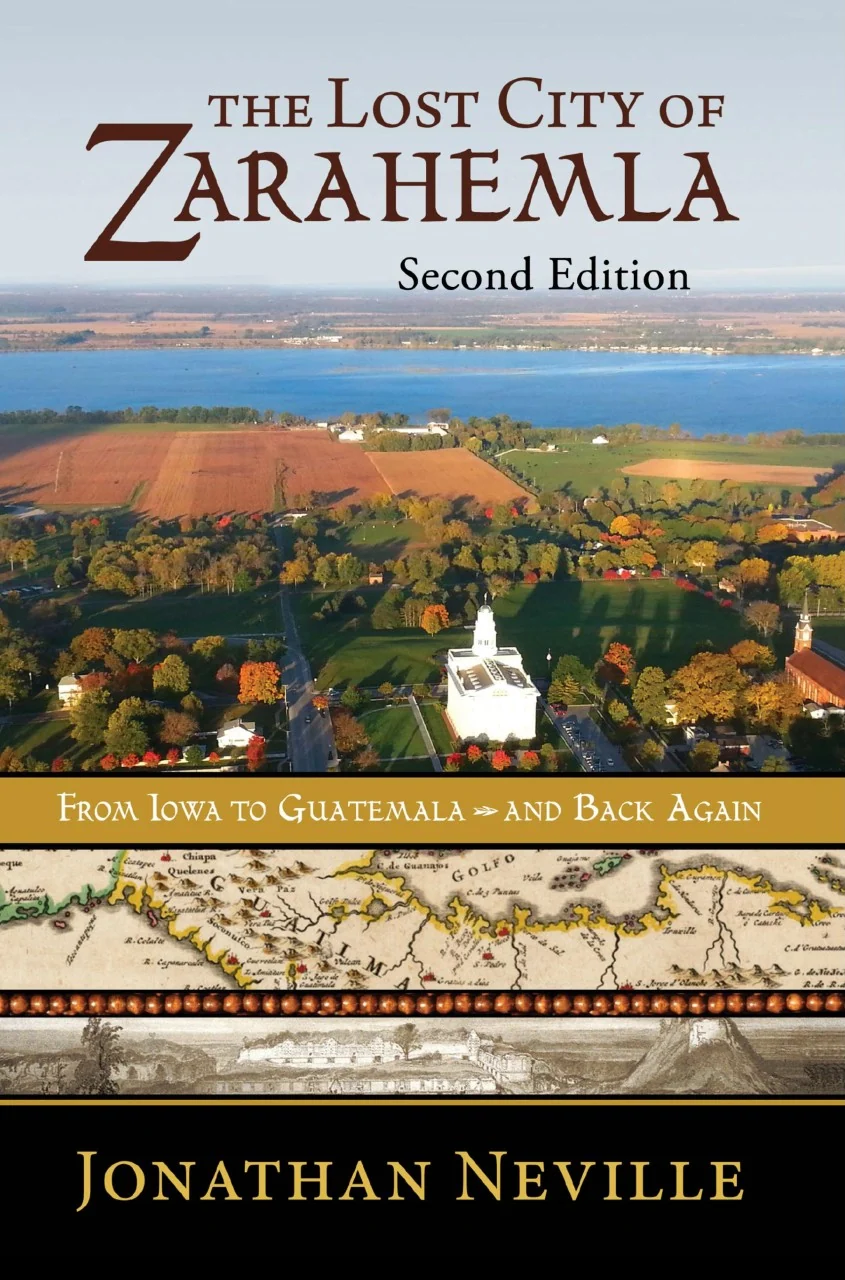
Given what Joseph Smith and the prophets actually said — the plains of the Nephites, Zelph, Cumorah in New York, Zarahemla across from Nauvoo — how did the idea arise that the Book of Mormon instead took place in Mesoamerica, in Central America and southern Mexico? Jonathan Neville’s book The Lost City of Zarahemla traces that history in detail.
Here it is in brief. (The full account, with its sources, is summarized on Jonathan’s podcast page; the book itself is reviewed by the Association for Mormon Letters.)
Benjamin Winchester’s Proposal
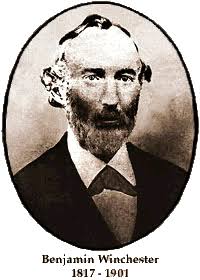
According to Neville’s research, Benjamin Winchester promoted the idea that the Book of Mormon took place in Central America and Mexico.
Here I share Neville’s insightful perspective: “In 1842, a zealous, committed Mormon [Benjamin Winchester] invented a way to gain more converts. All he had to do was link the Book of Mormon to popular books, including a national bestseller, about Mesoamerica. This proof would be irresistible to the public. Except the prophet disagreed with the tactic. Convinced he was right, he battled Joseph Smith. Formally suspended and silenced, he fought back. He arranged for the publication in the Times and Seasons of articles that specifically linked the Book of Mormon to Mesoamerica. The consequences? Joseph Smith resigned from the paper. The champions of the Mesoamerican theory apostatized from the Church. And the Mesoamerican theory would undermine faith in Joseph Smith’s role as prophet, seer and revelator for the next 174 years. This man’s zeal and subterfuge have remained a secret despite the devoted efforts of historians, educators, and church leaders to uncover the truth. Until now. Joseph Smith’s response: he resigned as editor of the Times and Seasons, putting a disclaimer in the paper, and stated, in 1842, ‘I cannot read a periodical that I am not the author or accomplisher of the obligation or fact that it expresses.’”
Joseph Smith’s response: he resigned as editor of the Times and Seasons, putting a disclaimer in the paper, and stated, in 1842, “I cannot read a periodical that I am not the author or accomplisher of the obligation or fact that it expresses.”
Winchester’s associates and champions — William Smith, John E. Page, and John C. Bennett — all apostatized. With the Church’s newspaper in Nauvoo passing into other hands, the Mesoamerica idea had a publishing platform it would keep up until now among LDS. But the number is decreasing as new truths are bring forth light about where the Book of Mormon really took place.
What the Lord Had Already Said
Here is the timing that matters most. In March 1841 — just before the Mesoamerica controversy got going — the Lord gave the revelation recorded in Doctrine and Covenants
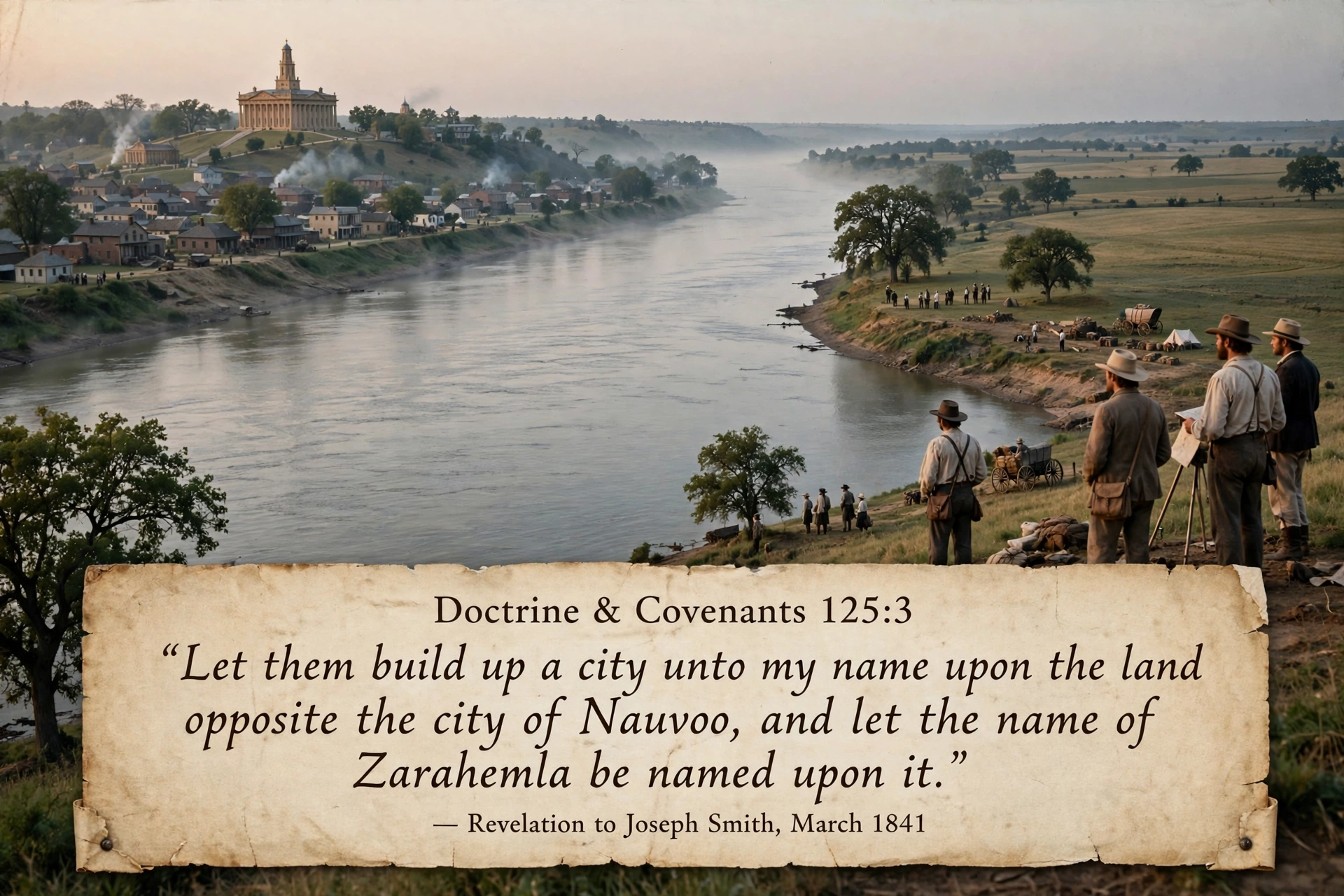
The Lord gave the name of the city of Zarahemla in America, and He did it when the Saints were right there, ready to build. Reading the Book of Mormon reveals it also had the City of Manti directly to the southward — in what is now Missouri — consistent with what it says in the Book of Alma.
How the Idea Spread Anyway
My wife Edna has an idea about why it spread. As the Church became strong enough to send large numbers of missionaries into Central and South America, those missionaries told the people there that they were descendants of Lehi.
And can you imagine telling converts that the Book of Mormon did not happen in their part of the world, after they had been converted by the truth and power of the book?
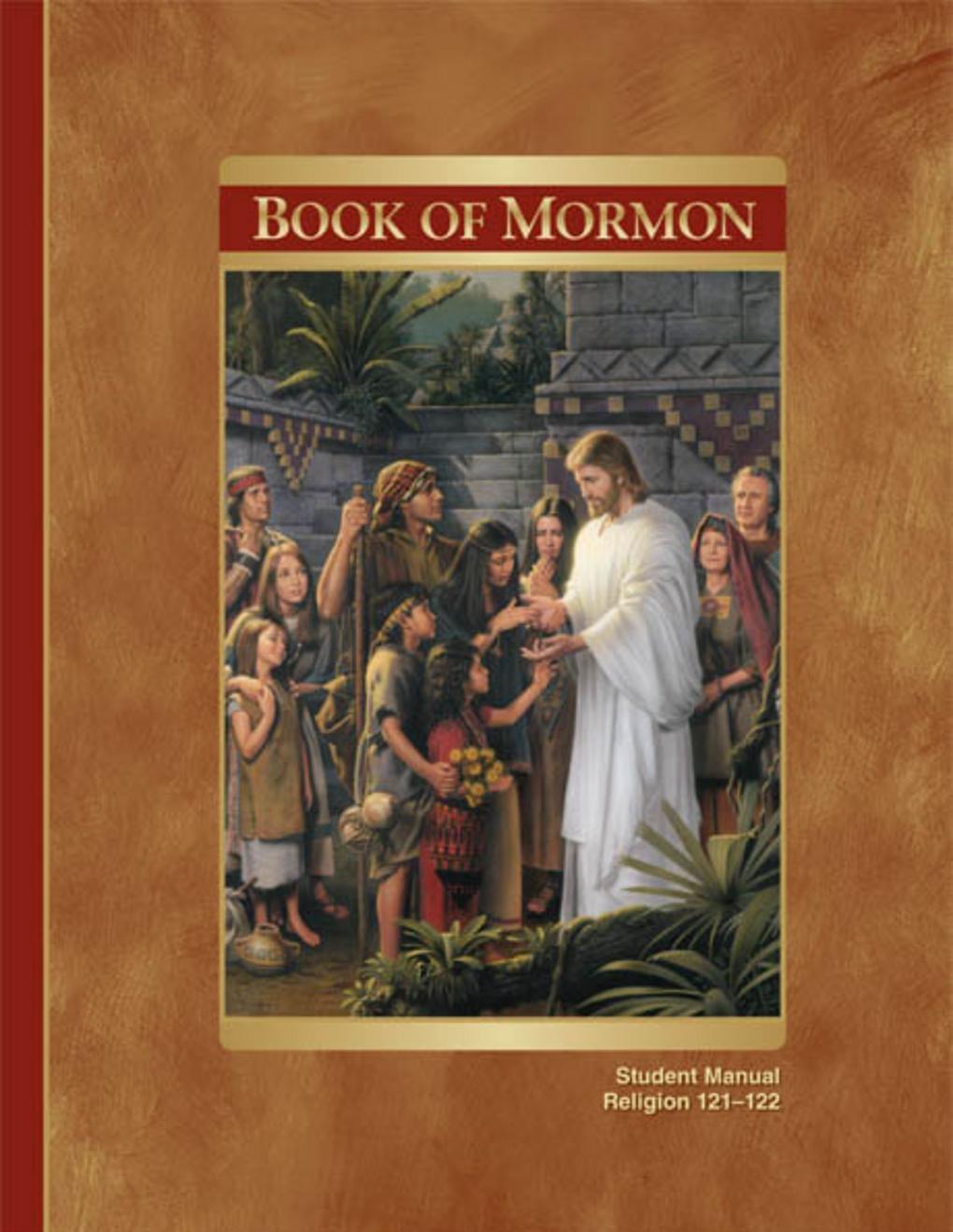
When we came back from our mission (1997-99) from the Ivory Coast, shortly thereafter I was asked to set up and teach Institute for the Moroni Stake. I did that for eleven years. It was a great experience; I learned a lot and taught a lot! When I started, the Book of Mormon manual for the course had many pictures indicating that the Book of Mormon took place in Mesoamerica. Later, they changed the manual and it had no pictures, as new information was coming forth.
Hugh Nibley is respected in the LDS community as the most foremost scholar; he was a professor at BYU.
 Coming back from a trip in 1966 to Central America, he said, “I learned more about the Book of Mormon from this trip… than from all the years I have been working on it, and that is because of the complete lack of definite information about anything Book of Mormon.” Contrast that with his assessment of the Hopewell:
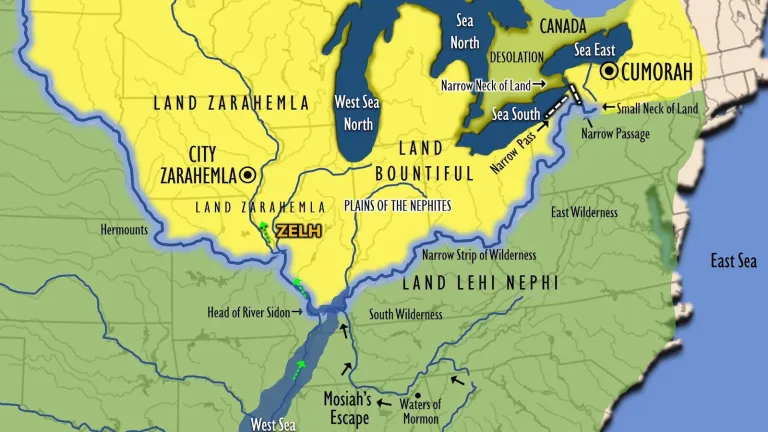
“There is hardly a point at which the [Hopewell] earth and palisade structures do not give a closer approximation to the descriptions of the Book of Mormon than the haphazard stone structures of Mesoamerica” (Nibley, Approach to the Book of Mormon, ch. 14).
Nibley said that the Adena and Hopewell cultures better represent the Jaredites and Nephites. Now there is a large amount of evidence that confirms what he said.
In the final article of this series, we turn to the evidence itself: the stones, the DNA, and the earthworks that point to the Heartland.
David W. Allan
Next in this series: Part 4 — “Evidence in the Heartland: Stones, DNA, and the Newark Earthworks.”
In this series — “Book of Mormon Geography — And Why It Matters”:
Part 1: Where Did The Book Of Mormon Really Take Place?
Part 2: What Joseph Smith and Other Latter-Day Prophets Actually Said
Part 3: How the Mesoamerica Idea Entered the Church
Part 4: Evidence in the Heartland: Stones, DNA, and the Newark Earthworks