Part 2 of 4 in the series “Book of Mormon Geography — And Why It Matters”
If God says it, then I know.
So what has God said — through the Prophet Joseph Smith, who knew better than anyone where the Book of Mormon took place, and through the prophets who followed him? Here is the record, in their own words.
Joseph Smith: The Wentworth Letter (1842)
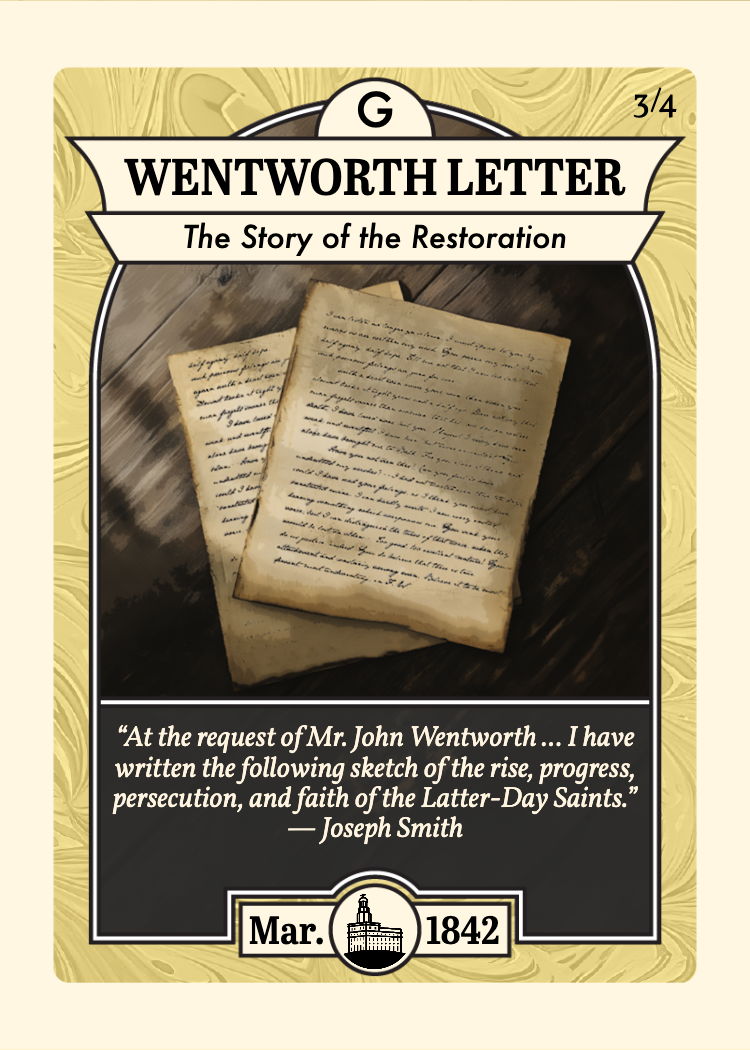
In the famous Wentworth Letter, Joseph described the Book of Mormon this way: “In this important and interesting book the history of ancient America is unfolded, from its first settlement; by a colony that came from the Tower of Babel… to the beginning of the fifth century of the Christian Era.” America, he wrote, was inhabited by two races: the Jaredites, who came from the Tower of Babel, and a second race from Jerusalem about 600 B.C., principally Israelites of the descendants of Joseph. “The remnant are the Indians that now inhabit this country.” And this book, he said, tells us “that our Savior made His appearance unto this continent after His resurrection; that He planted the Gospel here in all its fullness.” Read the full letter at the Church’s website: The Wentworth Letter.
Earlier, in a letter written by commandment on 4 January 1833, Joseph stated: “The Book of Mormon is a record of the forefathers of our western tribes of Indians… By it we learn that our western tribes of Indians are descendants from that Joseph that was sold into Egypt, and that the land of America is a promised land unto them.”
“Wandering Over the Plains of the Nephites” (1834)
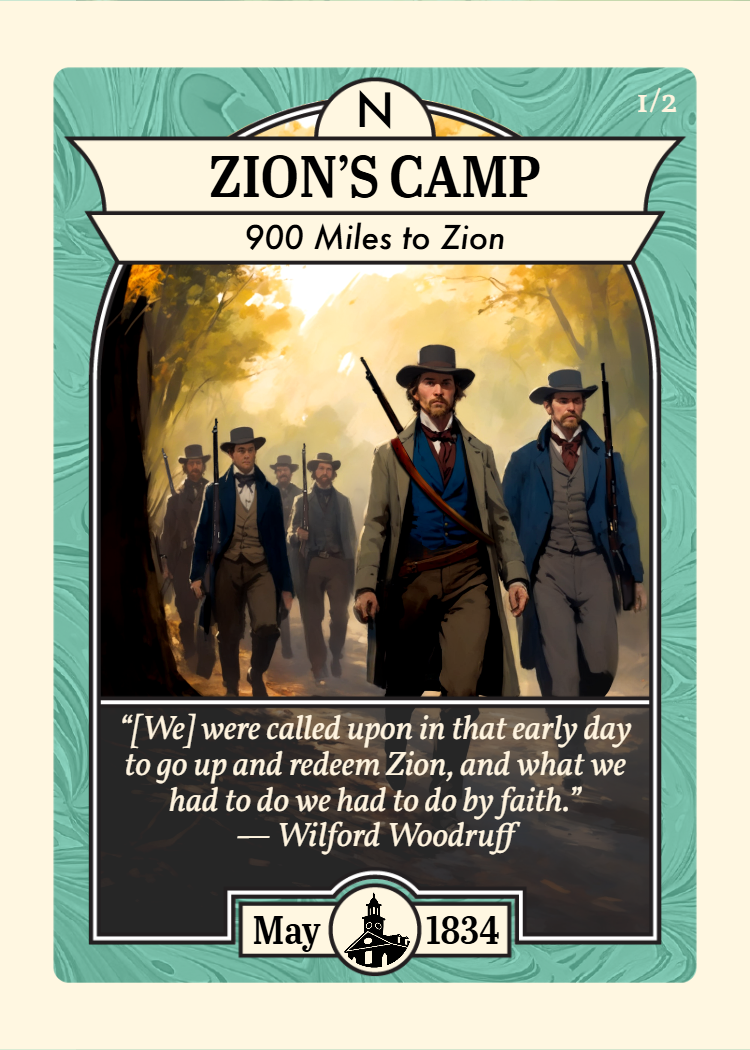
On the Zion’s Camp march — 900 miles from Kirtland, Ohio, to Clay County, Missouri — Joseph wrote to Emma on 4 June 1834: “The whole of our journey, in the midst of so large a company of social honest and sincere men, [was] wandering over the plains of the Nephites, recounting occasionally the history of the Book of Mormon, roving over the mounds of that once beloved people of the Lord, picking up their skulls and their bones, as a proof of its divine authenticity.” (Letter to Emma Smith, 4 June 1834)
The day before that letter, the camp had unearthed a skeleton in a mound — a man “almost entire, and between his ribs the stone point of a Lamanitish arrow.” Joseph recorded what revelation then showed him: the man was “a white Lamanite, a large thick-set man, and a man of God. His name was Zelph. He was a warrior and chieftain under the great prophet Onandagus, who was known from the Hill Cumorah, or eastern sea, to the Rocky Mountains.” Eight others in Zion’s Camp wrote of this experience in their journals. It is now called Zelph’s Mound; we have been there. (See BYU’s “Joseph Smith and Native American Artifacts”.)
Joseph also walked the ground where the City of Manti was built in Missouri — a location documented in the historical record of his travels. (See “Joseph Smith’s Historically Verifiable Written Statements”.)
Oliver Cowdery: Letter VII (1835)
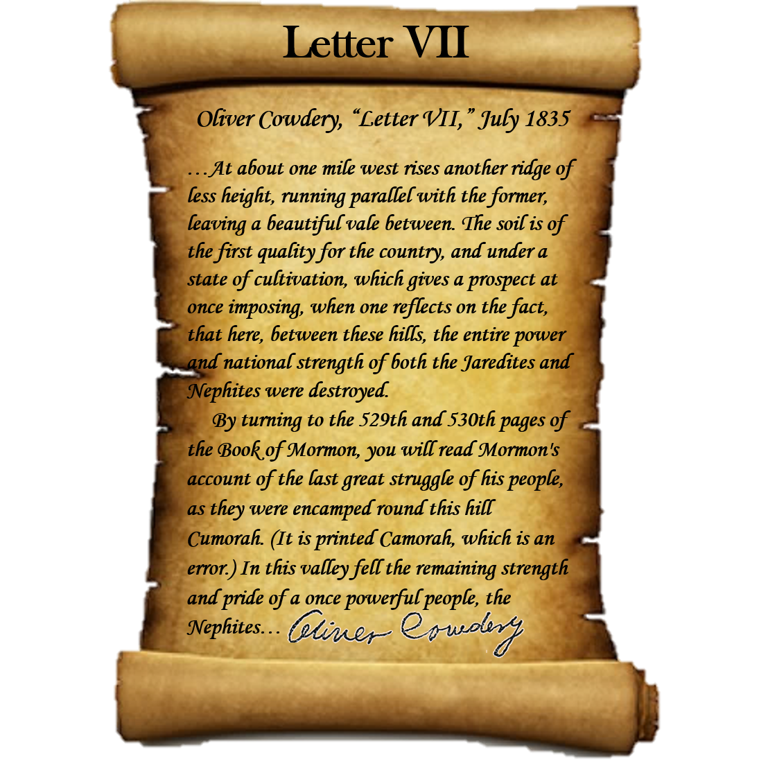
President Oliver Cowdery, of the First Presidency, wrote Letter VII with Joseph Smith’s assistance. Describing the view west of Hill Cumorah, he declared it a “fact, that here, between these hills, the entire power and national strength of both the Jaredites and Nephites were destroyed.” Moroni, he wrote, deposited “all the records in this same hill, Cumorah.” Read the full text: Letter VII.
Later Prophets Bear the Same Witness
President Marion G. Romney, standing on Cumorah in 1975, shared that in western New York “the great Jaredite nation… perished at the foot of Cumorah,” and that the Nephite civilization “came to an end for the same reason, at the same place, and in the same manner as did the Jaredites.” He closed: “I bear you my personal witness that I know that the things I have presented to you today are true.” (“America’s Destiny,” General Conference, October 1975)
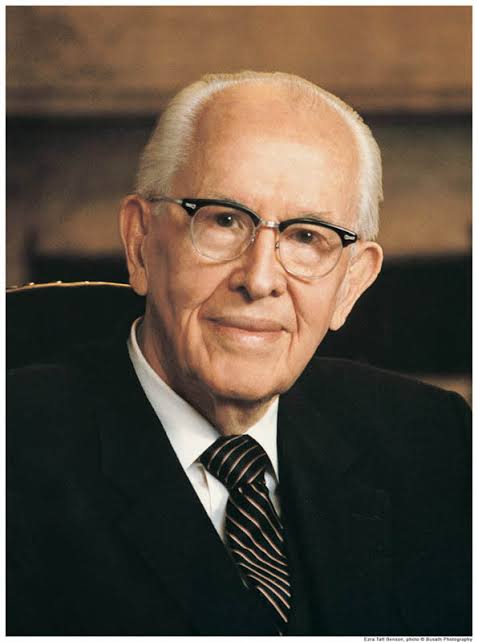
President Ezra Taft Benson wrote regarding North America: “This was the place where Adam dwelt; this was the place where the Garden of Eden was; it was here that Adam met with a body of high priests at Adam-ondi-Ahman… This was the place of three former civilizations: that of Adam, that of the Jaredites, and that of the Nephites.” (*The Teachings of Ezra Taft Benson*, pp. 587–588)
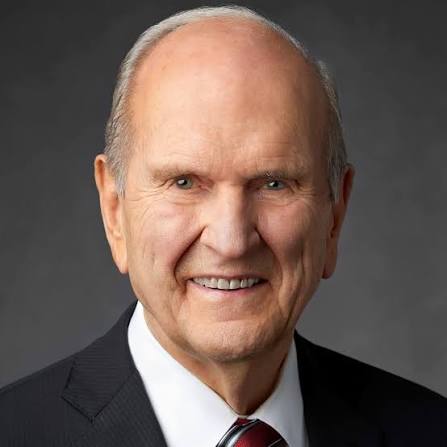
President Russell M. Nelson shared that Joseph’s inheritance “was to be a land choice above all others” — choice because it was “chosen to be the repository of sacred writing on golden plates from which the Book of Mormon would one day come,” choice because it would host the world headquarters of the restored Church, and choice because it is “a land of liberty for those who worship the Lord.” (Address to new mission presidents, June 2016)
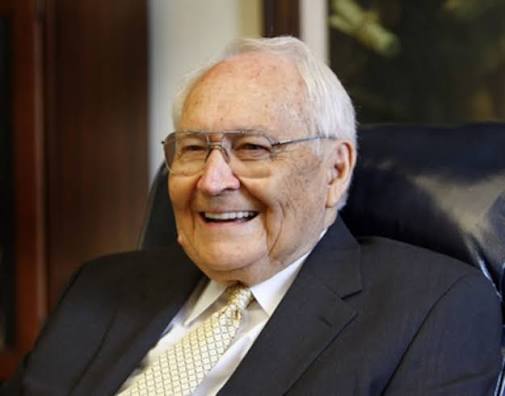
And Elder L. Tom Perry summarized it all: “The United States is the promised land foretold in the Book of Mormon.” (*Ensign*, December 2012)
A Hard Question
If the people of this Promised Land do not repent and are swept off, can they then tell the Lord, “Had we known this was the Promised Land, we would have repented”? But He has told us. The prophets have told us — consistently, from Joseph Smith to Russell M. Nelson.
So how did so many of us come to believe the Book of Mormon took place somewhere else? That is the subject of the next article.
David W. Allan
Next in this series: Part 3 — “How the Mesoamerica Idea Entered the Church.”
- In this series — “Book of Mormon Geography — And Why It Matters”:
Part 1: Where Did The Book Of Mormon Really Take Place?
Part 2: What Joseph Smith and Other Latter-Day Prophets Actually Said
Part 3: How the Mesoamerica Idea Entered the Church
Part 4: Evidence in the Heartland: Stones, DNA, and the Newark Earthworks
Sources — Check Them for Yourself
- The Wentworth Letter (Joseph Smith, Times and Seasons, 1 March 1842), full text: churchofjesuschrist.org.
- Joseph Smith to Emma, 4 June 1834, and the Zelph account: BYU Religious Studies Center, “The ‘Nature’ of Revelation” and “Joseph Smith and Native American Artifacts”. The Zelph account itself is in The Joseph Smith Papers, History, 1838–1856, Volume A-1, p. 483.
- Oliver Cowdery, Letter VII (July 1835), full text: lettervii.com.
- Marion G. Romney, “America’s Destiny,” 145th Semiannual Conference, 4 October 1975 — quoted here.
- Ezra Taft Benson, The Teachings of Ezra Taft Benson, pp. 587–588 — quoted here.
- Russell M. Nelson, address to new mission presidents, June 2016 — quoted here.
- L. Tom Perry, Ensign, December 2012, and a collection of the prophets’ statements on Cumorah and the promised land: Book of Mormon Evidence.
- Joseph Smith’s statements, including the City of Manti: Book of Mormon Evidence.
Related reading:
-
- Part 1: Where Did The Book Of Mormon Really Take Place?
- America’s Greatest Need: Repentance — https://itsabouttimebook.com/americasgreatestneedrepentance/